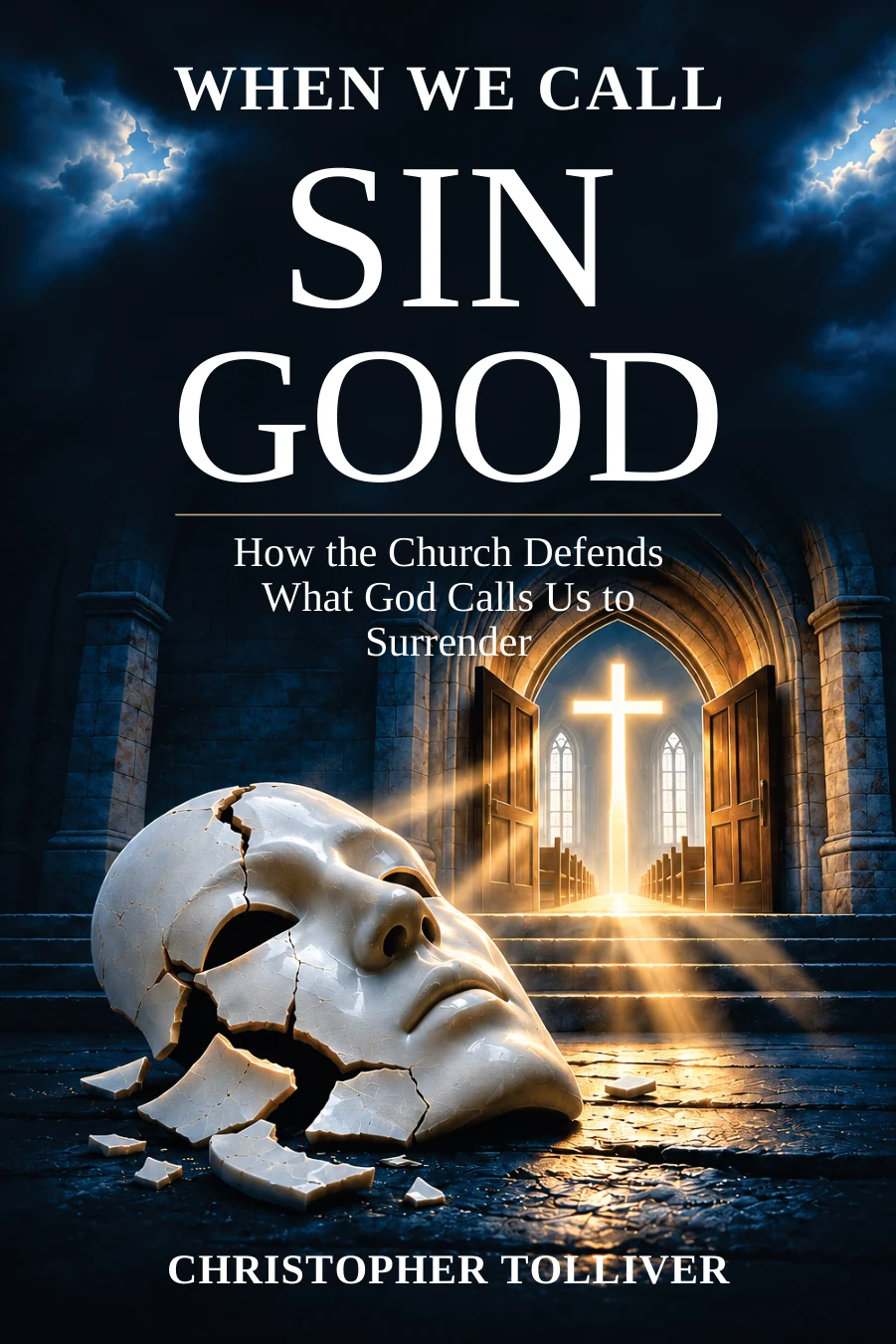
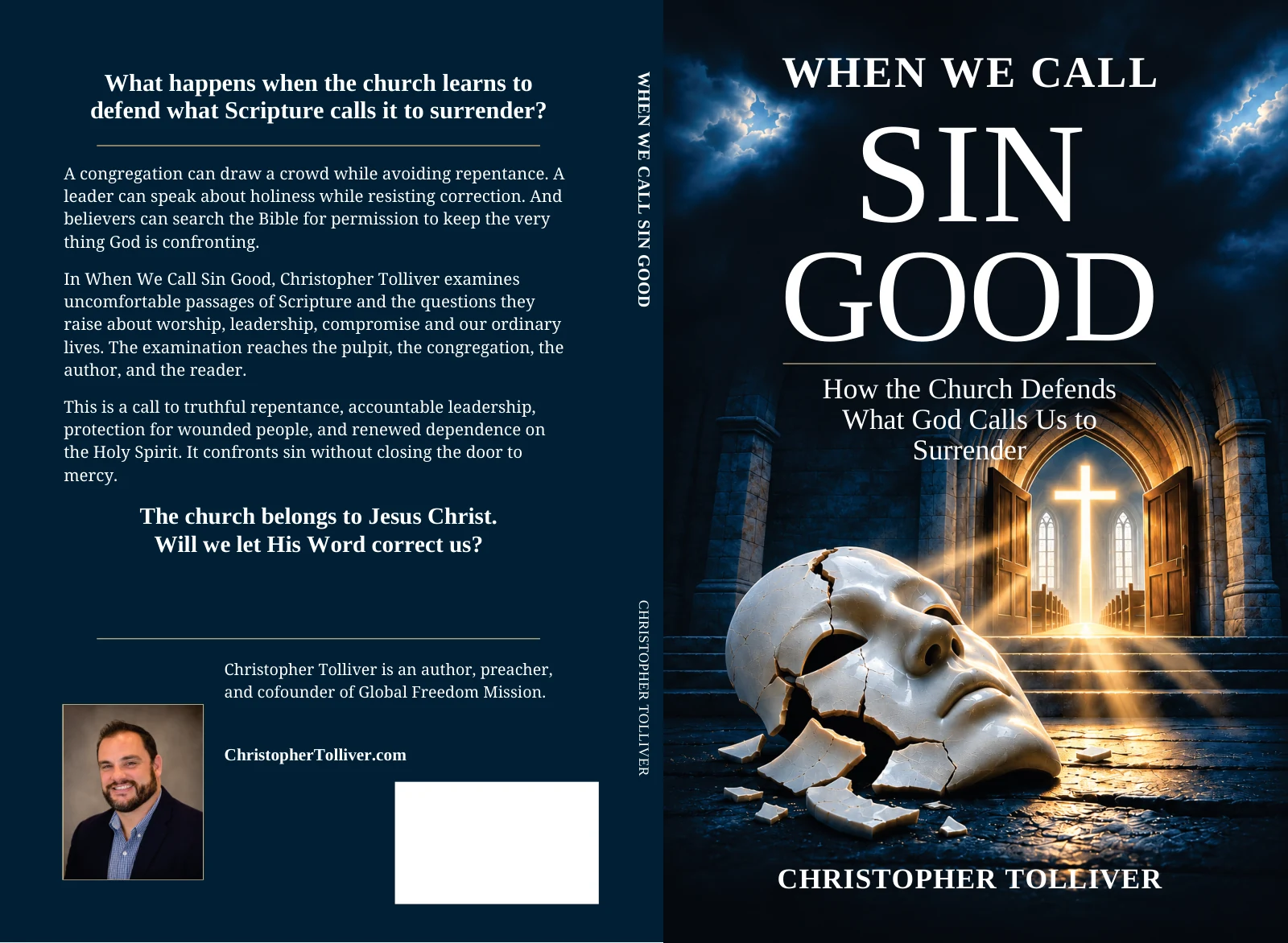
When We
Call Sin Good
How the Church Defends What God Calls Us to Surrender
What have we learned to defend instead of surrender?
A church can be admired while refusing correction. A leader can preach repentance while protecting private disobedience. And any of us can use the language of grace to avoid the truth we most need to hear.
In When We Call Sin Good, Christopher Tolliver calls the church, its leaders, and himself back to Scripture. Moving from the Flood and the Exodus through the prophets and the New Testament churches, he examines how compromise takes root, how spiritual authority can be misused, and what returning to Jesus Christ requires.
A call to examination and renewal.
Rooted in Scripture, this book brings repentance, accountable leadership, and hope in Jesus Christ into focus.
Previously shared reader sample. See the sample details.
Explore the book’s central questions- Category
- Christian nonfiction
- Audience
- Leaders & believers
- Structure
- 18 chapters
- Focus
- Repentance & renewal
A call to personal examination
Open Scripture.
Face what you have been defending.
Return to Christ.
Read before you choose
Chapter 1.
Wake Up, Church.
Begin with the chapter Christopher has shared publicly from When We Call Sin Good.
This is a previously shared reader sample, not the full book. Text and layout may differ from a later published edition.
Read Chapter 1: Wake Up, Church (PDF)An 8-page PDF. No signup required.
Explore the message
Where is the Word
calling you to look?
Three connected themes.
Choose a place to begin.
Scripture · A thread through the book
What are we defending?
How can we recognize Scripture being used to protect what it actually confronts?
Follow the book from the Flood and Exodus through the prophets and the New Testament churches. Begin with what the text says, and the correction it brings.
Explore the book’s questionsRepentance · A thread through the book
Let repentance reach conduct.
How should repentance change our conduct toward people we have harmed?
Consider confession, accountability, restitution, and the responsibilities that remain when others have been hurt. Forgiveness must never demand silence or a return to danger.
Explore the book’s questionsRenewal · A thread through the book
Return to Christ in hope.
What does grace teach us about holiness, obedience, and life in the Spirit?
Explore grace and the renewing work of the Holy Spirit as the book calls believers toward obedience, mature discipleship, and faithful service.
Explore the book’s questionsInside the book
Questions that reach
beyond the pulpit.
Eighteen chapters bring the question of obedience into our teaching, leadership, relationships, and private choices.
- Grace and obedienceWhen does compassion become an excuse for disobedience?
- Scripture and correctionHow can we recognize Scripture being used to protect what it actually confronts?
- Authority and accountabilityWhat distinguishes a welcoming church from an unaccountable pulpit?
- Repentance and responsibilityHow should repentance change our conduct toward the people we have harmed?
- Holiness and life in the SpiritWhat does grace teach us about holiness, obedience, and life in the Spirit?
For leaders and the
people they serve.
Written from a Spirit-filled Christian perspective, this book addresses pastors, ministry leaders, and Christians who want their faith to reach ordinary life.
It argues for a traditional biblical sexual ethic while confronting adultery, greed, abuse, and the double standards that protect influential people. It insists that those who have been harmed deserve safety and trustworthy care, and that forgiveness must never be used to demand silence or a return to danger.
A searching call to repentance is held together with hope in Christ’s mercy and the Holy Spirit’s renewing work.
Reader questions
Who wrote When We Call Sin Good?
Christopher Tolliver wrote When We Call Sin Good: How the Church Defends What God Calls Us to Surrender.
What is the book about?
When We Call Sin Good examines spiritual compromise, repentance, and accountable church leadership through Scripture. It calls the reader to confront what they have learned to defend instead of surrender.
What themes does it explore?
The book connects grace and obedience, Scripture and correction, spiritual authority and accountability, repentance and responsibility, and the renewing work of the Holy Spirit.
What is its central invitation?
Open Scripture willing to be corrected, let repentance reach the way you live, and return to Jesus Christ in hope.
Who is this book written for?
Pastors, ministry leaders, and believers who want to examine their lives through Scripture, understand biblical accountability, and follow Jesus Christ with renewed obedience.